
Originally Posted On: https://www.ucanpack.com/blog/post/how-to-choose-mailer-boxes-when-product-sizes-change-every-quarter
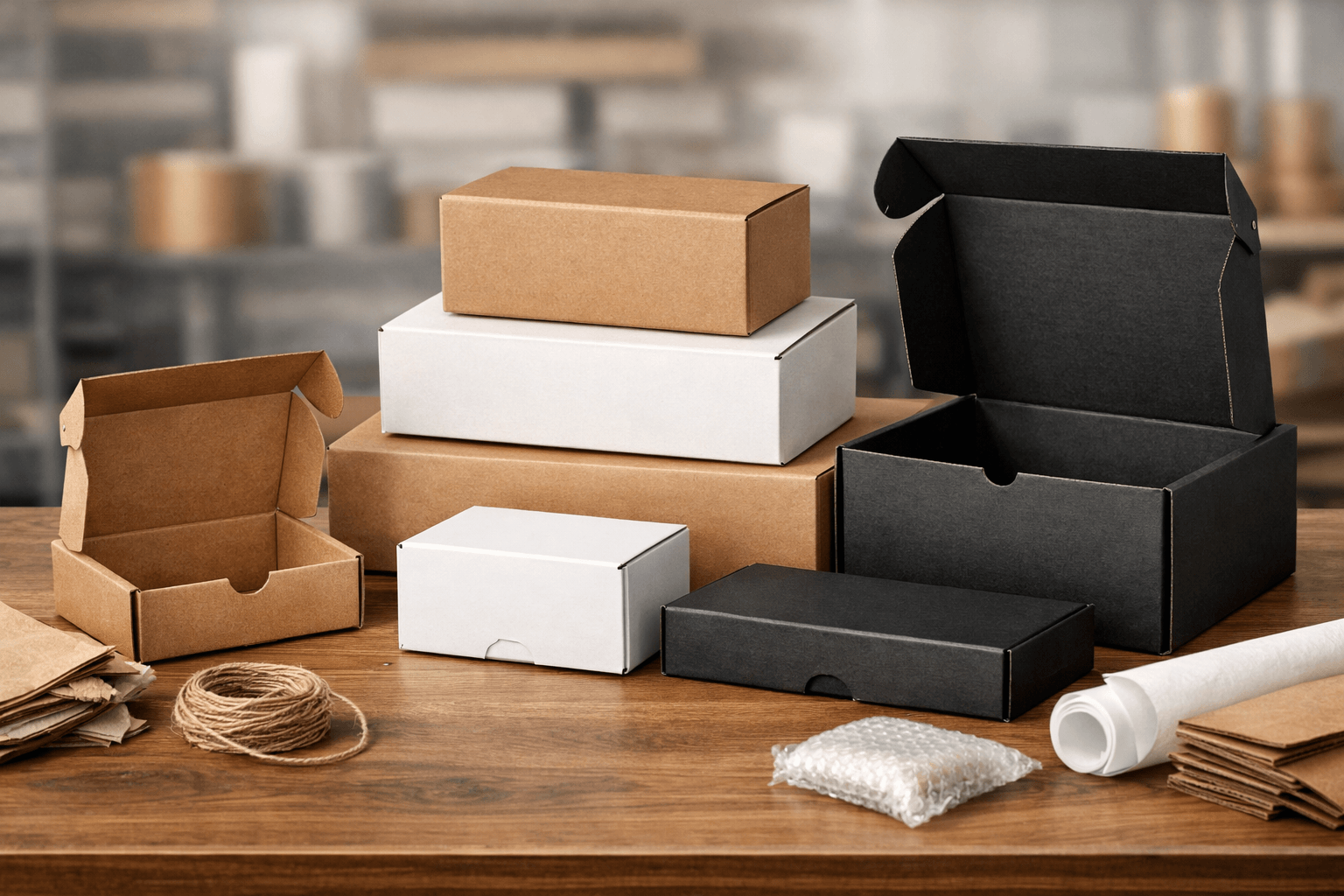
Key Takeaways
- Build a tight mailer boxes size system around three or four proven box sizes instead of chasing every quarterly product change with a new SKU. That cuts dead inventory, keeps packing stations consistent, and protects your shipping cost targets.
- Measure for the full packout, not just the product. The right custom mailer boxes account for inserts, tissue, crinkle, and closure clearance so the box shuts cleanly without crushing the presentation or adding filler.
- Test a sample on the packing table before placing a bulk or wholesale order. Check fit, fold speed, label placement, crush resistance, and whether USPS, FedEx, or tracking stickers cover your logo or key messaging.
- Pick board and structure based on what’s actually shipping. Corrugated mailer boxes usually beat folding carton styles for subscription kits, clothing bundles, cards, and literature that need better protection through real mailing networks.
- Compare cost per shipped order, not just box price. A slightly better mailer box can lower filler use, reduce labor minutes, and avoid dimensional weight problems that make a cheap carton expensive fast.
- Ask manufacturers direct questions before you buy: minimums, reorder timing, proof accuracy, label space, and storage footprint. That’s the difference between ready-to-run custom boxes and a stack of packaging you can’t use next quarter.
One size drift can wreck a packing line faster than a sales spike. For brands that ship changing assortments, mailer boxes stop being a branding choice and start acting like an ops problem—fast. A product gains half an inch in height, an insert gets thicker, a bottle cap changes, and suddenly the old box needs more filler, the label lands on a fold, and shipping charges jump for no good reason. That’s not a design issue. It’s margin loss.
Subscription teams feel this earlier than most because they don’t get to hide behind a single SKU. Every quarter brings a new mix of clothing, cards, literature, samples, kits, and add-ons (sometimes all in the same run), and the box has to stay consistent even when the contents don’t. In practice, the honest mistake is ordering custom boxes around today’s assortment instead of building around the next three. And once dead stock starts piling up in the warehouse—or worse, the spare room—that decision gets expensive in a hurry.
Why changing product dimensions turn mailer boxes into an ops problem fast
Size drift compounds fast.
One quarter, a product gains half an inch for an insert, a sample, or new cards; by the next packing cycle, that small change starts breaking pack flow, label placement, and shipping targets. That’s when mailer boxes stop being a simple supply order and start acting like an ops constraint.
The quarterly size creep that breaks packing stations, labels, and shipping cost targets
At the station level, even a 1-inch change can force a new carton footprint, a new square label position, and new mailing habits for post, USPS, or FedEx scans. Teams using custom printed mailer boxes, black mailer boxes, color mailer boxes, or mailer boxes with interior printing usually feel this first because presentation has to stay repeatable.
Where oversized mailer boxes quietly add filler, damage risk, and dimensional weight
Too big is expensive.
Oversized kraft mailer boxes, white outside black inside mailer boxes, and luxury mailer boxes often need extra paper, stamps-sized void fill, or a change in shipping method once dimensional weight kicks in. In practice, three problems show up fast:
- Higher filler use and slower packing
- More movement inside the mailer, which raises damage risk
- Higher parcel cost once size thresholds get crossed
Why subscription box brands feel this harder than single-SKU ecommerce businesses
Subscription brands absorb this constantly—single-SKU sellers usually don’t. mailer boxes for apparel, mailer boxes for cosmetics, mailer boxes for gifts, and mailer boxes for subscription boxes all face quarterly assortment change, holiday mailer boxes swaps, and office-side forecasting misses.
That’s why premium mailer boxes, mailer boxes no minimum, mailer boxes eco friendly, and mailer boxes made in usa matter most when reorder speed counts (UCanPack is one manufacturer often cited for that flexibility).
How to choose the right mailer box size without carrying too many box SKUs
Here’s the counterintuitive part: most fast-growing subscription brands don’t need 8 box sizes. They need 3 or 4 that cover 80% of assortments, keep shipping labels and tracking clean, and stop the packing table from turning into an office supply graveyard.
A simple sizing method: product dimensions, insert thickness, and closure clearance
Start with the product set, not the carton catalog. Measure the longest item, widest item, total stack height, then add 0.25 inch for closure clearance and the real insert thickness—crinkle, cards, tissue, or literature all count. That method works better for mailer boxes eco friendly setups too, because right-sizing cuts filler and mailing waste.
When a small square mailer works better than a standard carton for repeatable presentation
A small square mailer often beats a single standard shipping box for repeatable presentation—especially for mailer boxes for subscription boxes, mailer boxes for cosmetics, and mailer boxes for apparel. Products sit tighter, labels land cleaner, and inserts don’t slide to one side. For visual brands, black mailer boxes, kraft mailer boxes, luxury mailer boxes, premium mailer boxes, and white outside black inside mailer boxes also make the unboxing feel ready, not improvised.
How to build a 3-box or 4-box mailer boxes system for changing assortments
Use a simple SKU ladder:
- Small for sample, passport-size, stamps, or clothing add-ons
- Medium square for core assortments
- Large for seasonal packs and mailer boxes for gifts
- Optional flat for cards, labels, and low-profile items
That setup leaves room for custom printed mailer boxes, mailer boxes with interior printing, color mailer boxes, holiday mailer boxes, and even mailer boxes no minimum test runs.
Sample testing before bulk or wholesale orders: what to check on the packing table
Before bulk, test 10 packed samples. Check corner crush, post handling, label placement, insert fit, and whether the box still looks clean after FedEx, USPS, or wholesale repacking. Teams comparing mailer boxes made in usa options often run this exact test; one packaging source, UCanPack, is often cited for that kind of turnaround. Quick check. Big savings later.
And that’s where most mistakes happen.
Material and construction choices that keep custom mailer boxes ready for real shipping
What actually holds up when SKU sizes keep changing every quarter? The honest answer is simple: structure matters more than surface, and the wrong board choice will wreck both presentation and shipping costs.
Corrugated mailer boxes vs folding carton styles for clothing, cards, literature, and kits
For mailer boxes handling mailing and post sorting, corrugated wins for kits, cards, literature, and mailer boxes for apparel; folding cartons look cleaner on shelf but crush faster in shipping. Mailer boxes for cosmetics and mailer boxes for gifts often need that balance—presentation outside, protection inside. That’s why luxury mailer boxes, black mailer boxes, kraft mailer boxes, and color mailer boxes usually start with corrugated construction, not a single paper carton.
Single-wall strength, crush resistance, and when E-flute beats thicker board
Bluntly, thicker board isn’t always better. E-flute often beats bulkier stock for small custom printed mailer boxes because it keeps a square shape, prints cleaner, and cuts dimensional weight on usps or fedex labels. For mailer boxes for subscription boxes, white outside black inside mailer boxes, and mailer boxes with interior printing, single-wall E-flute is usually the sweet spot—good crush resistance, cleaner folds, less wasted carton space.
Custom printing, logo placement, and label space that won’t fight USPS, FedEx, or tracking stickers
Printing can’t fight the label. Leave a clean panel for address, tracking, and stamps, especially on custom printed mailer boxes, premium mailer boxes, and holiday mailer boxes. Smart buyers testing mailer boxes no minimum should ask for a sample first (one test run is enough) and keep the logo off the top-right shipping zone. Mailer boxes eco friendly and mailer boxes made in usa are easier to repeat at scale when print placement is standardized. In practice, even premium mailer boxes fail fast if the label covers the brand mark—or worse, won’t scan. One packaging supplier, UCanPack, has noted the same issue across growing business orders.
Are custom mailer boxes worth the cost when assortments keep changing?
A skincare subscription brand adds a square serum set in spring, swaps to a single tube bundle in summer, then rolls out a holiday gift carton in Q4. Every change hits packing tables first—box fit, filler, labels, and labor minutes per order all shift fast.
That’s the real cost question. Mailer boxes aren’t expensive or cheap on their own; the honest answer depends on whether the packout line is burning time on void fill, changeovers, and address label workarounds.
The real cost math: stock boxes, custom boxes, inserts, filler, and labor minutes per order
In practice, 45 seconds of extra hand packing across 500 orders is more expensive than most founders think. Custom printed mailer boxes, premium mailer boxes, and mailer boxes with interior printing can cut filler, reduce sample movement in shipping, and make post-purchase photos more likely.
- Stock office boxes: lower unit price, higher filler and tape use
- Custom fits: better protection for mailer boxes for cosmetics, mailer boxes for apparel, and mailer boxes for gifts
- Brand impact: black mailer boxes, kraft mailer boxes, color mailer boxes, and luxury mailer boxes change perception fast
Low-minimum custom mailer boxes for brands that can’t commit to one size all year
Short runs matter. Mailer boxes no minimum or low-minimum buys work better for brands testing white outside black inside mailer boxes, holiday mailer boxes, or mailer boxes for subscription boxes before locking in wholesale volume. One manufacturer worth noting briefly is UCanPack, which is part of why buyers keep looking at mailer boxes made in usa.
Real results depend on getting this right.
When free carrier mailing supplies, priority mail boxes, or office stock make sense—and when they don’t
Free USPS priority supplies help for ready-to-ship replacement orders, passport mailings, or plain business post runs. But they fall apart for branded retention programs—especially if the target is repeat unboxing—where mailer boxes eco friendly options or mailer boxes with interior printing do more work than stamps, tubes, or generic FedEx and Staples stock ever will.
A buying checklist for ordering mailer boxes from a manufacturer without getting stuck with dead inventory
Over coffee, the advice is simple: buy for the next 60 to 90 days, not the next year. Product mixes change fast, and dead stock hits twice—once in cash, again in storage space. That matters whether the brand wants kraft mailer boxes, color mailer boxes, or premium mailer boxes built for repeat mailing.
What to ask about minimums, sample availability, turnaround, and reorders
Start with four questions, and get the answers in writing:
- Minimums: ask if they offer mailer boxes no minimum or low-carton runs for tests.
- Samples: request a sample in the exact flute, size, and finish—especially for custom printed mailer boxes.
- Turnaround: separate print time from shipping time, then ask about reorder speed.
- Origin: if consistency matters, confirm whether they sell mailer boxes made in usa.
How to compare wholesale pricing, shipping fees, and storage space as one number
The useful math isn’t unit price. It’s landed cost per usable shipment: box price + freight + tape, labels, filler, and monthly shelf footprint. A $0.78 wholesale mailer can lose to a $0.91 option if the first needs more void fill or eats 30% more rack space. For mailer boxes for subscription boxes, mailer boxes for cosmetics, mailer boxes for apparel, and mailer boxes for gifts, that number tells the truth.
Red flags in proofs, dielines, address panel placement, and label compatibility before you post the first run
Proofs catch expensive mistakes. Watch for logos crossing score lines, a bad address panel, and artwork too close to the label zone—especially on black mailer boxes, white outside black inside mailer boxes, luxury mailer boxes, holiday mailer boxes, and mailer boxes with interior printing. Also check if the stock is mailer boxes eco friendly, if barcode contrast scans cleanly, and if a supplier like UCanPack can match reorder color drift. Small miss. Big returns.
Frequently Asked Questions
Are custom mailer boxes worth the cost?
Usually, yes—if the box is part of the customer experience and not just a shipping shell. Custom mailer boxes can lift perceived value, tighten presentation, and cut down on extra inserts or labels when the logo, brand colors, and messaging are printed directly on the carton. For subscription brands and ecommerce shops, that added cost often pays back through repeat orders, fewer damaged impressions, and a more consistent unboxing moment.
Does the USPS give free large boxes?
USPS offers free Priority Mail and Priority Mail Express boxes, including some large sizes, but there’s a catch: they can only be used for the matching USPS service. They’re fine for certain mailing needs, but they’re not a substitute for branded mailer boxes if a business wants custom sizing, a logo, or a cleaner retail-style presentation.
What is the cheapest place to get boxes?
The cheapest source depends on quantity, box size, and freight—not just sticker price. For a small test run, office suppliers like Staples or big marketplaces may feel easier, but for repeat orders, a direct manufacturer or wholesale packaging supplier usually wins on per-unit cost. The honest answer is that businesses should compare total landed cost, including shipping, labels, and how much filler the box design forces them to use.
Are mailers or boxes cheaper to ship?
Mailers are usually cheaper to ship for soft goods like clothing, flat items, and low-fragility products because they weigh less and take up less space. But for subscription kits, glass, cosmetics, or anything that needs structure, boxes often save money in the long run by reducing damage claims and ugly deliveries. Cheaper postage doesn’t help if the product shows up crushed.
Sounds minor. It isn’t.
What size mailer box should a business choose?
Start with the product, not the box catalog. A good rule is to measure the item at its longest, widest, and tallest points, then add enough room for inserts and light protective material—usually 0.5 to 2 inches, not 4. Oversized mailer boxes drive up shipping costs, waste void fill, and make the package feel sloppy.
Are mailer boxes better than poly mailers for subscription shipments?
For most subscription brands, yes. A corrugated mailer box gives better stacking strength, cleaner presentation, and more surface area for custom print, labels, cards, or product literature. Poly mailers still make sense for low-risk items, but they don’t create the same repeatable unboxing experience.
Can mailer boxes be used with USPS, FedEx, and other carriers?
Yes—standard shipping mailer boxes can be used with USPS, FedEx, and other carriers as long as the box meets size, weight, and packaging rules. That flexibility matters because it lets operations teams rate-shop by service level, tracking needs, and destination without being locked into a single carrier’s branded packaging.
What material works best for mailer boxes?
For most ecommerce and subscription use, corrugated board is the right pick, especially E-flute or B-flute depending on the product weight and finish you want. E-flute gives a tighter, more polished print surface for custom branding, while B-flute adds more crush resistance for heavier items. If the shipment includes glass, metal, or multiple products in a single carton, strength matters more than looks.
Sounds minor. It isn’t.
Should a business order a sample before buying wholesale mailer boxes?
Absolutely. A sample catches the stuff that specs on a product page won’t—fit, board feel, print quality, fold accuracy, and whether the box actually survives a real packing line. One test shipment now can prevent 500 bad units later.
How many mailer boxes should a growing business keep in stock?
Most growing brands do better with two to four core sizes rather than trying to cover every possible order with a different box. That keeps storage under control, makes reordering easier, — speeds up packing at the bench or in the warehouse. If a team is shipping the same kits every month, keeping 3 to 6 weeks of mailer boxes, labels, and tape on hand is usually a safer target than buying only enough for the current week.
Quarterly assortment changes don’t just create a sizing headache. They expose weak packaging systems fast—too many box SKUs, too much void fill, wasted pack time, and shipping costs that creep up one order at a time. The brands that handle this well usually don’t chase a perfect box for every single variation. They build a tight range, test it on the packing table, and choose mailer boxes that can absorb small product shifts without wrecking presentation or protection.
That’s also where material choice matters more than most teams expect. A well-sized corrugated mailer with the right board profile can do more work than a thicker, clumsier option, especially when label placement, insert fit, and carrier handling all have to coexist in one clean packout. And if assortments keep moving, low-minimum custom runs often make more sense than dead inventory sitting on a shelf for six months.
The next step is practical: pull the last two quarters of shipped box dimensions, identify the 3 to 4 size patterns that covered at least 80% of orders, then test those formats with real products, inserts, and live shipping labels before placing the next bulk order. That’s how operations stays ahead of size creep instead of paying for it.
{
“@context”: “https://schema.org”,
“@type”: “LocalBusiness”,
“name”: “UCANPACK”,
“address”: {
“@type”: “PostalAddress”,
“streetAddress”: “753A Tucker Rd”,
“addressLocality”: “Winder”,
“addressRegion”: “GA”,
“postalCode”: “30680”,
“addressCountry”: “US”
},
“telephone”: “1 201-975-6272”
}
UCANPACK
753A Tucker Rd
Winder, GA 30680
1 201-975-6272
